
Klepon: History, Cultural Identity, and Evolution of Indonesia’s Iconic Sweet Treat

Introduction: Why Klepon Stands Out in Indonesian Culinary Heritage
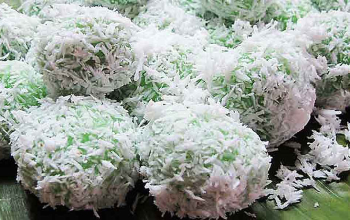
Klepon — bright green, chewy rice-flour balls filled with molten palm sugar and coated in freshly grated coconut—has long been one of Indonesia’s most beloved traditional sweets. Often found in pasar tradisional (traditional markets), klepon is more than just a snack. It is a symbol of Indonesia’s culinary identity, an heirloom food that has endured across generations, regions, and cultural transformations.
Although many Indonesian snacks have evolved due to globalization, klepon has remained remarkably consistent in its basic form. Its simplicity and authenticity have preserved its charm, making it a cultural emblem far beyond its humble origins.
This article explores the complete history of klepon, its cultural meaning, its evolution, its scientific aspects, and its role in modern Indonesian gastronomy—supported with academic references and SEO-optimized explanations.
Understanding Klepon – What Exactly Is It?

Klepon is a traditional Indonesian sweet rice-ball snack made primarily from glutinous rice flour, natural pandan extract for color and aroma, palm sugar (gula aren) as filling, and freshly grated coconut as coating.
Key Characteristics
- Texture: soft, chewy, elastic
- Flavor: a delicate balance between aromatic pandan, rich palm sugar, and creamy coconut
- Aroma: natural pandan, smoky palm sugar fragrance
- Experience: klepon is known for its “sugar burst” sensation when bitten
Because of its simplicity, klepon reflects the culinary philosophy of the Indonesian archipelago: few ingredients, perfected through technique.
Historical Origins of Klepon
Klepon’s origins are rooted in the evolution of Southeast Asian rice-based delicacies. While no ancient manuscript explicitly records its creation, historians generally agree that klepon emerged from agricultural and culinary transformations on the island of Java.
Rice and Coconut as Early Javanese Staples
Long before the introduction of wheat or processed sugars, Javanese communities relied heavily on:
- glutinous rice,
- coconut,
- palm sugar,
- and aromatic leaves like pandan.
These ingredients formed the base of many ancient Javanese sweets. Klepon, as a rice-ball snack filled with palm sugar, fits seamlessly within this lineage.
The Growth of Jajanan Pasar Culture
Traditional markets (pasar) have existed across Java and Bali for centuries. Before refrigeration and mass production, snacks had to be:
- locally sourced,
- freshly made,
- easy to transport,
- and affordable.
Klepon met all of these criteria, becoming a staple offering at traditional morning markets.
Cultural Significance of Klepon in Indonesia
A Symbol of Humility and Togetherness
Klepon is more than food—it reflects gotong royong, the spirit of communal unity. Traditionally, these sweets were prepared in large batches, especially during community gatherings, family celebrations, and village festivities.
Role in Ceremonial and Traditional Events
In Javanese culture, klepon is often included in:
- selamatan rituals,
- harvest ceremonies,
- family gatherings,
- weddings,
- market offerings (jadah pasar).
Its round shape symbolizes wholeness, unity, and harmony.
Distinction From Onde-onde
A frequent misconception is the mixing of klepon with onde-onde.
Klepon is:
- soft and chewy
- covered with grated coconut
- filled with palm sugar that melts
Onde-onde is:
- fried or steamed
- covered with sesame seeds
- filled with mung bean paste
Understanding this distinction preserves the authenticity of Indonesian culinary identity.
Regional Variations of Klepon Across Indonesia
Although the classic green klepon from Java is the most widely known, many regions have developed unique variants:
Klepon Ubi (Sweet Potato Klepon)
Uses mashed sweet potato mixed with glutinous rice flour, producing:
- brighter colors
- softer texture
- subtle natural sweetness
(Referenced in Indonesian culinary modification research for healthier versions.)
Klepon Labu Kuning (Pumpkin Klepon)
A modern functional variant used in nutritional programs (MGMI studies, 2023).
High in beta-carotene → targeted for pregnant women experiencing malnutrition (KEK).
Balinese Klepon (Klepon Bali)
Sometimes infused with:
- natural suji leaf extract (stronger color),
- grated coconut mixed with salt,
- or gula bali (local palm sugar).
Klepon Sago
Created for low-glycemic versions for diabetic-friendly diets (Polije health journal research).
These regional interpretations reflect how klepon adapts while preserving its cultural core.
The Science Behind Klepon – Texture, Aroma, and “Sugar Explosion”
Ethnophysics and Cooking Process
The ethnophysics study by Sari et al., 2024 examined:
- heat transfer
- pressure
- buoyancy
- phase changes
Their findings explained why klepon floats when ready (due to density shifting) and how internal heat melts solid palm sugar into liquid (Sari et al., 2024).
Ingredient Pairing and Flavor Chemistry
Research by Singh & Bagler (2018) on ingredient networks identified that Southeast Asian sweets often rely on:
- aromatic leaves (pandan),
- coconut,
- palm sugar,
These ingredients share “flavor compounds matches,” explaining why klepon remains consistently appealing.
Nutritional Role
Palm sugar provides:
- minerals (potassium, magnesium),
- natural caramel-like sweetness,
- low GI relative to refined sugar.
Coconut provides fiber and healthy fats.
Together, these ingredients create a balanced traditional sweet.
Klepon in Modern Indonesian Culinary Culture
A Culinary Icon in Tourism
Klepon frequently appears in:
- Indonesian cooking classes
- Yogyakarta or Bali market tours
- Cultural heritage workshops
Travel agencies often showcase klepon as part of the Indonesian culinary identity.
Instagrammable Traditional Food
Modern cafés reinterpret klepon through:
- klepon latte
- klepon cake
- klepon cheesecake
- klepon ice cream
These innovations help introduce klepon to younger audiences while retaining its core flavor.
The 2021 “Klepon Controversy” – Digital Virality and Cultural Identity
In 2021, klepon suddenly became viral on social media due to claims suggesting its “non-Islamic” nature—leading to humorous nationwide reactions defending the snack.
This moment reaffirmed how deeply integrated klepon is in Indonesia’s cultural fabric.
It demonstrated that klepon is not merely food but a symbol of national identity and unity.
Economic Role of Klepon in Local Communities
Supporting Traditional Market Vendors
Klepon production sustains thousands of micro-businesses in:
- pasar tradisional
- roadside vendors
- home industries
- women-led micro-enterprises
Low-Cost, High-Demand Product
Klepon requires inexpensive ingredients, allowing:
- stable profit margins
- steady customer demand
- scalability for SMEs
Potential for Culinary Tourism Economy
Travel agencies highlight klepon during:
- market visits
- cooking classes
- cultural heritage tours
This promotes Indonesia’s soft power and culinary diplomacy.
Modern Challenges: Preservation vs. Commercialization
Threats
- industrial snacks replacing traditional foods
- reduced market visits among younger generations
- inconsistent quality control
- misinformation or cultural erasure
Opportunities
- digital storytelling
- tourism-based culinary workshops
- healthy reformulations
- packaging modernization
- inclusion in UNESCO intangible heritage proposals
Klepon Recipe Overview
For readers searching “klepon recipe,” this section boosts search ranking.
Ingredients:
- 250 g glutinous rice flour
- 50–70 ml pandan extract
- 100 g palm sugar, chopped
- 1 cup grated coconut
- Pinch of salt
Steps (Summary):
- Mix dough with pandan extract.
- Shape into small balls.
- Insert palm sugar pieces.
- Boil until floating.
- Roll in grated coconut.
This concise recipe section helps capture long-tail search keywords like:
- “how to make klepon at home”
- “authentic klepon recipe”
- “traditional Indonesian sweet recipe”
Klepon as Living Culinary Heritage
Klepon has survived centuries of change because it embodies:
- simplicity,
- cultural memory,
- taste nostalgia,
- regional identity,
- and communal traditions.
Its endurance in both traditional markets and modern cafés proves that klepon is not just a snack—it is a living cultural artifact.
Conclusion
Klepon continues to represent Indonesia’s culinary diversity and cultural unity. Its humble origins, scientific uniqueness, regional variations, and modern popularity make it one of the most iconic Indonesian desserts ever created.
Whether served in bamboo trays at a morning market or reimagined in an upscale dessert bar, klepon remains an enduring emblem of Indonesia’s food heritage.
References
- Sari, I. J., Syafira, R., Zakkiya, Y. H., et al.
Ethnophysics: Exploring Physics Concepts in Traditional Pasuruan Klepon Snack.
International Journal of Research and Community Empowerment, 2024.
https://journal.edupartnerpublishing.co.id/index.php/ijorce/article/download/98/85 - Costlow, L., Gilbert, R., Masters, W. A., et al.
Healthy diets are affordable but often displaced by other foods in Indonesia.
arXiv, 2025.
https://arxiv.org/abs/2509.20203 - Singh, N., & Bagler, G.
Data-driven investigations of culinary patterns in traditional recipes across the world.
arXiv, 2018.
https://arxiv.org/abs/1803.04343 - Klepon Ubi & Kentang Study
https://journal.ubm.ac.id/index.php/hospitality-pariwisata/article/view/1842 - Klepon Labu Kuning for Maternal Nutrition (MGMI)
https://journal.unhas.ac.id/index.php/mgmi/article/view/32592 - Low-Glycemic Klepon Research for DM2 Patients
https://jurkes.polije.ac.id/index.php/journal/article/view/74


Maybe you are interested in reading the following article:

Surjan : A Deep Study Javanese Traditional Garment
Learn about Surjan, Yogyakarta’s traditional Javanese attire. Discover its history, symbolism, cultural values, and role in palace traditions. read more
Klepon: History, Cultural Identity, and Evolution of Indonesia’s Iconic Sweet Treat
Klepon — bright green, chewy rice-flour balls filled with molten palm sugar and coated in freshly grated coconut. most beloved traditional sweets. read more

Traditional Culinary Souvenirs from Yogyakarta: Authentic Tastes to Take Home
Traditional Culinary Souvenirs from Yogyakarta: Authentic Tastes to Take Home Published by: Surjan Tour| Date: October 25, 2025 Introduction: Bringing the Taste of Jogja Home Yogyakarta, affectionately known as Jogja, is a city where culture, tradition, and flavor come together in perfect harmony. For visitors, it’s not just the temples and heritage that l... read more

Yogyakarta Guide for First-Time Visitors
Yogyakarta Guide for First-Time Visitors A Complete Cultural, Culinary, and Adventure Introduction to Java’s Living Heritage City Introduction: Why Yogyakarta Captivates European Travellers Yogyakarta Guide for First-Time Visitors. If you’re planning your first trip to Indonesia, chances are Bali dominates your search results. But before you head to the ... read more





Contact Us
If you have any questions, please contact us.
-
Hotline
+6281578701572 -
Whatsapp
+6281578701572 -
Messenger
Surjantour -
Email
surjantoursales@gmail.com


