
Surjan : A Deep Study Javanese Traditional Garment
22 December 2025 8x Culture
Surjan : A Deep Study of Javanese Traditional Garment — History, Function, and Cultural Transformation
Introduction
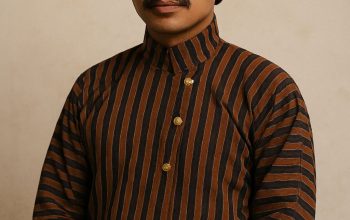
Surjan is an iconic traditional men’s garment from the Javanese cultural sphere, particularly associated with Yogyakarta and Central Java. More than just clothing, Surjan represents identity, spirituality, and the moral values of Javanese society passed down across generations. Originating within royal culture and gradually adopted by broader society, Surjan embodies philosophical meaning, social hierarchy, and cultural continuity. This article explores Surjan in depth — its history, etymology, cultural influences, material, symbolic meaning, roles in ritual and daily life, and its transformation in contemporary society — backed by academic studies and reliable sources.
I. Surjan : Historical Background and Etymology

1. Origins of Surjan
Surjan is believed to have deep roots in Javanese history. Traditionally, this garment was worn by nobles and palace attendants during formal occasions in the Mataram Kingdom and later within the Yogyakarta Sultanate. While everyday clothing in the Majapahit era varied with social strata, Surjan emerged as a distinctive men’s shirt that unified local aesthetics and functional needs. Indonesia Travel
Some historical interpretations — including oral traditions — attribute the creation of the first Surjan to Sunan Kalijaga, one of the nine revered Islamic saints (Wali Songo), who used local cultural forms as vehicles of religious teaching. This narrative positions Surjan as part of a broader strategy of accommodating Islamic values into existing Javanese cosmology. IDN Times Jogja
2. Etymology of the Term “Surjan”
Scholars and cultural institutions provide multiple etymological interpretations of the word Surjan:
- In some interpretations, Surjan may derive from an Arabic term similar to sirajan, related to phrases like sirajan munira — “light that illuminates,” emphasizing spiritual enlightenment. detikcom+1
- Other cultural scholars link Surjan to compound terms from Sanskrit or Old Javanese roots such as suraksa-janma meaning “becoming human,” suggesting a garment that symbolizes moral and social maturity. kabarno.com
- Local palace sources also mention siro + jan as meanings tied to “light” or “bringing brightness,” highlighting Surjan’s function as dignified attire. Farah.id – Inspiring & Educating
3. Cultural Influences: Hindu–Buddhist and Islamic Synthesis
Surjan represents a synthesis of cultural influences. While Javanese textiles and patterns existed in the Majapahit era as symbols of social identity, later Muslim cultural integration through figures like Sunan Kalijaga introduced an emphasis on modesty and religious virtues in textiles and clothing practices. Through Surjan, these layered identities — Hindu–Buddhist heritage and Islamic ethos — were visually articulated. Indonesia Travel
II. Materials, Motifs, and Types of Surjan
1. Core Materials
Traditional Surjan is made from lurik — a striped woven cloth typical of Java — known for its durability, comfort in tropical climates, and cultural symbolism of simplicity and resilience. Indonesia Travel
Other variants may include finer woven fabrics or even silk for nobility, reflecting social status. Kr Jogja – Paling Mengerti Jogja
2. Common Motifs and Variations
Surjan displays several motifs and variations:
- Surjan Lurik: Characterized by vertical or combined striped patterns, traditionally worn by attendants and palace guards. Kr Jogja – Paling Mengerti Jogja
- Surjan Ontrokusuma: Decorated with floral motifs, historically reserved for nobility. Kr Jogja – Paling Mengerti Jogja
- Additional variants may exhibit blended motifs or modern adaptations, reflecting changes in fashion and social use.
Visually, Surjan typically features a high collar and long sleeves with buttons running down the front — a style that symbolizes neatness and discipline. Indonesia Travel
III. Philosophical Meaning in Design Elements

1. Buttons and Symbolism
The number and arrangement of buttons on Surjan hold symbolic significance. Traditional interpretations link them to Islamic teachings such as the Six Articles of Faith (Shahada, prayer, charity, fasting, pilgrimage, judgment) and other spiritual concepts. detikcom
2. Lurik Stripes as Life Principles
The striped lurik pattern represents life principles — vertical lines symbolizing one’s relationship with the divine, and horizontal lines symbolizing human relations — embodying simplicity, order, and moral boundaries. febi.uinsalatiga.ac.id
3. Colors and Modesty
Dominant colors in Surjan — often dark, earthy tones — express humility and inner calm. The long sleeves and structured collar reflect values of self-restraint and dignity. Indonesia Travel
IV. Cultural Function and Social Use
1. Symbolic Functions
Surjan serves as a cultural mirror that reflects spiritual values, social discipline, and Javanese identity. Worn traditionally during ceremonial occasions, it embodies respect for heritage and collective memory. Indonesia Travel
2. Practical Use
In historical times, Surjan was a formal attire for royal ceremonies and palace functions. Today, it appears in cultural heritage events, weddings, and festival occasions, bridging historical tradition with contemporary identity expression. Indonesia Travel
3. Education and Character Building
Beyond aesthetics, Surjan is integrated into cultural education programs to teach respect, discipline, and appreciation of heritage among younger generations.
V. Surjan in Yogyakarta Palace Culture

In the Yogyakarta Sultanate (Keraton), Surjan historically functioned as court attire with specific ceremonial roles. Variations in motif, color, and pattern indicated rank and hierarchy — noble members wore distinct types compared to attendants. Indonesia Travel
Surjan is still worn in major palace ceremonies and cultural rituals, such as Grebeg and other formal events, reinforcing its identity as royal cultural attire. Indonesia Travel
VI. Surjan’s Role in Society: Cultural Transformation
1. From Court to Community
While Surjan was once exclusive to the palace and nobility, over time it has transitioned into broader social use. Many community members now wear Surjan during cultural festivals, educational events, and heritage celebrations. Indonesia Travel
2. Social Change in Meaning
Modern interpretations of Surjan shift its role from strictly ceremonial to a symbol of local pride and cultural education. It is often incorporated into school uniforms or regional dress codes to promote heritage conservation. library.ifla.org
VII. Surjan Compared to Other Javanese Traditional Attire
Surjan stands distinct from other Javanese garments such as:
- Beskap (a more formal jacket from Surakarta with slanted buttons)
- Blangkon (traditional headgear often worn with Surjan)
- Kebaya (traditional female attire)
Each has unique cultural roles but collectively enrich Javanese sartorial heritage.
Comparison of Surjan Usage: Yogyakarta Palace vs General Society
The use of Surjan differs significantly between the
Yogyakarta Palace (Keraton Yogyakarta) and the
general Javanese community. These differences reflect
variations in social hierarchy, cultural rules, and symbolic meaning.
The table below presents a clear comparison of Surjan’s function,
symbolism, and usage in both contexts.
| Aspect | Surjan in Yogyakarta Palace (Keraton) | Surjan in General Society |
|---|---|---|
| Social Status |
Indicates rank, title, and hierarchy within the palace system, including nobles, royal family members, and abdi dalem. |
Functions as a symbol of regional identity and cultural pride, without strict social hierarchy. |
| Rules of Use |
Strict regulations regarding fabric, motif, color, and occasions, determined by palace tradition and royal protocol. |
More flexible usage; adapted to cultural events, education, tourism, and ceremonial occasions. |
| Types of Surjan |
Includes Surjan Lurik, Surjan Ontrokusuma, and Surjan Ksatrian, each reserved for specific ranks. |
Mostly Surjan Lurik or modern adaptations inspired by traditional designs. |
| Motif and Fabric |
Motifs and fabric quality reflect official position; larger lurik stripes often indicate higher rank. |
Motifs chosen for aesthetics, comfort, and cultural expression rather than rank. |
| Symbolic Meaning |
Represents authority, spiritual discipline, and adherence to Javanese court values. |
Represents cultural preservation, local identity, and appreciation of tradition. |
| Occasions of Use |
Worn during royal ceremonies such as Grebeg, Sekaten, palace rituals, and official court events. |
Worn during cultural festivals, weddings, heritage education, tourism activities, and traditional celebrations. |
| Spiritual Emphasis |
Strongly linked to Islamic philosophy, moral discipline, and Javanese spiritual ethics. |
Spiritual meaning is present but often secondary to cultural and educational value. |
| Contemporary Role |
Preserved as a sacred and formal royal garment within the palace environment. |
Revitalized as a cultural symbol supporting heritage education and tourism. |
This comparison demonstrates that while Surjan remains a highly regulated
and symbolic garment within the Yogyakarta Palace, its use in general
society reflects cultural adaptation and continuity. Today, Surjan
functions both as a living tradition and as a bridge between historical
heritage and modern Javanese identity.
Conclusion
Surjan is far more than a shirt — it is a cultural artifact woven with historical meaning, philosophical depth, and social significance. From palace rituals to community celebrations, Surjan continues to evolve as a living tradition that reflects Javanese values of humility, spiritual awareness, and cultural identity. By exploring its history, symbolic design, and contemporary relevance, Surjan illustrates how tradition can thrive even in a modern world, offering lessons in heritage, identity, and continuity.
Key References
✔ Indonesia.travel — Cultural context and traditional attire. Indonesia Travel
✔ Krjogja.com — Motifs and historical context. Kr Jogja – Paling Mengerti Jogja
✔ IDN Times Jogja — Historical accounts involving Sunan Kalijaga. IDN Times Jogja
✔ UIN Salatiga Cultural Analysis — Etymology, symbolism, and philosophical meaning. febi.uinsalatiga.ac.id
✔ Sabilulhuda.org — In-depth symbolism and traditional practice. sabilulhuda.org


Maybe you are interested in reading the following article:
Surjan : A Deep Study Javanese Traditional Garment
Learn about Surjan, Yogyakarta’s traditional Javanese attire. Discover its history, symbolism, cultural values, and role in palace traditions. read more

Holiday Trip: Make the Process Easier With This Guide Plan
Plan your dream holiday with ease. Follow this simple travel guide and explore Yogyakarta and Java with Surjan Tour – your trusted local tour operator read more

Yogyakarta Guide for First-Time Visitors
Yogyakarta Guide for First-Time Visitors A Complete Cultural, Culinary, and Adventure Introduction to Java’s Living Heritage City Introduction: Why Yogyakarta Captivates European Travellers Yogyakarta Guide for First-Time Visitors. If you’re planning your first trip to Indonesia, chances are Bali dominates your search results. But before you head to the ... read more






Contact Us
If you have any questions, please contact us.
-
Hotline
+6281578701572 -
Whatsapp
+6281578701572 -
Messenger
Surjantour -
Email
surjantoursales@gmail.com


