
Sate Klathak: The Charcoal-Grilled Soul of Yogyakarta
15 November 2025 30x Food & Beverages, Heritage
Smoke, Fire, and the Heart of Bantul
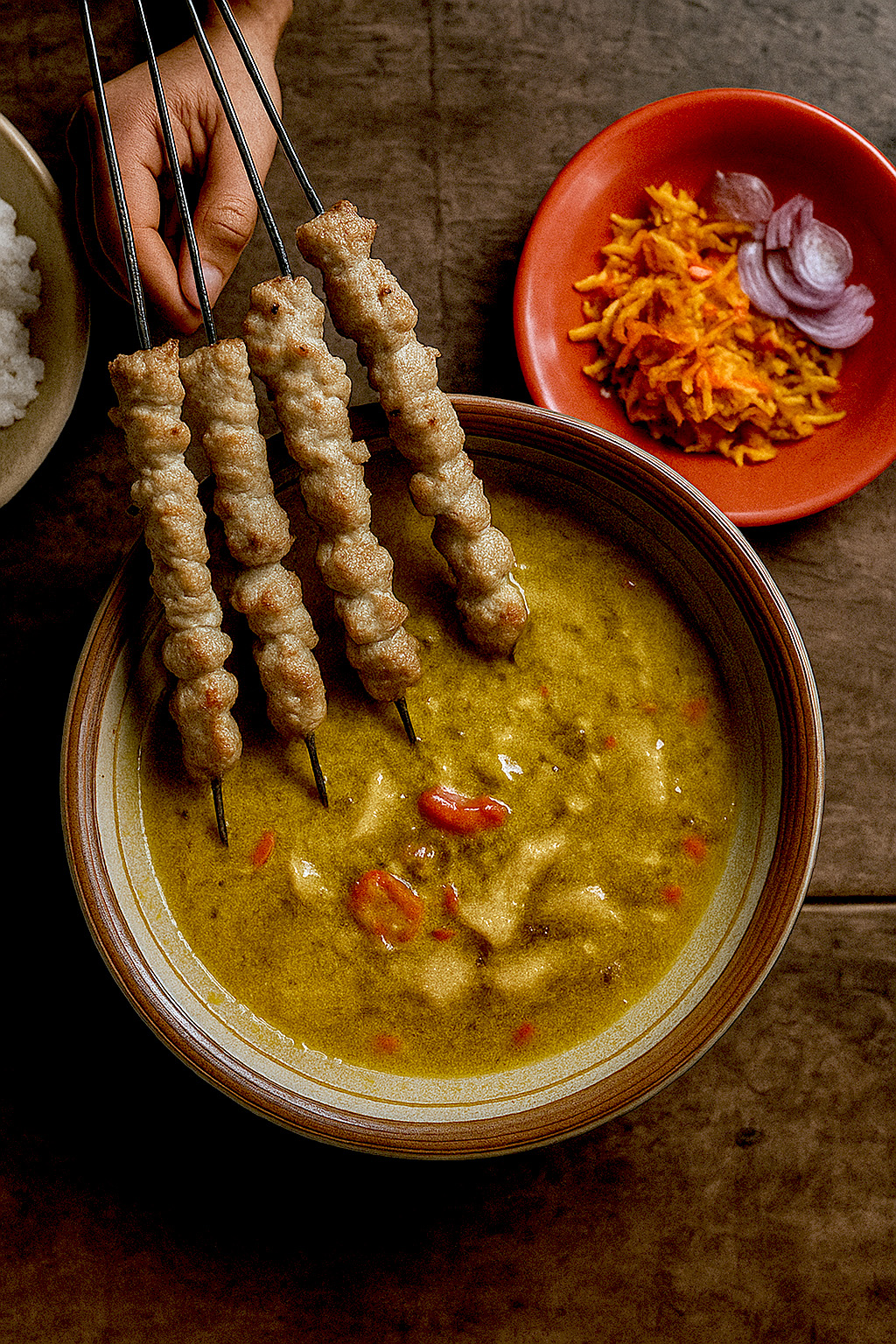
As the sun dips below the horizon in Bantul, a quiet neighborhood in the southern outskirts of Yogyakarta, a thin wisp of smoke curls upward from tiny warungs lining the street. The rhythmic “klathak-klathak” sound of sizzling meat punctuates the evening air, drawing locals and travelers alike toward a culinary tradition unlike any other in Indonesia. This is Sate Klathak — a humble grilled goat satay that has become an emblem of Yogyakarta’s heritage, celebrated for its simplicity, technique, and cultural significance.
Unlike the more familiar peanut-laden or sweet soy-coated sates of Indonesia, Sate Klathak is stripped to its essence: high-quality goat meat, coarse salt, a hint of pepper, and the transformative heat of charcoal, all skewered on iron rods repurposed from bicycle spokes. Yet beneath its minimalism lies a story centuries in the making, bridging history, community, and identity (Indonesia.travel, 2019).
From Mbah Ambyah to Modern Legend: A Historical Overview
The origins of Sate Klathak trace back to the 1940s in Jejeran, Pleret, Bantul, a district known for goat farming and small-scale culinary entrepreneurship. Here, Mbah Ambyah, a local goat herder, devised an ingenious method to grill meat using what was at hand: iron spokes from bicycles served as skewers, allowing the heat to penetrate evenly and impart a unique juiciness to the meat (Indonesia.travel, 2019).
Mbah Ambyah sold his satay under a melinjo tree (locally called “klathak”), which also inspired the name. Patrons recalled the sound of sizzling salt hitting the charcoal — klathak-klathak — and soon the dish adopted the onomatopoeic moniker (Indonesia.travel, 2019).
After Mbah Ambyah passed, his children and grandchildren, including Pak Wakidi and Pak Bari, continued the tradition, expanding the reach of Sate Klathak beyond Jejeran. Today, legendary stalls like Sate Klathak Pak Pong and Pak Bari remain pilgrimage sites for food lovers seeking authentic flavors steeped in history (Kompas.com, The Jakarta Post).
The Philosophy of Simplicity: Cultural and Culinary Significance
Sate Klathak embodies the Javanese philosophy of sederhana, or simplicity. The minimal seasoning — just salt, pepper, and sometimes a splash of lime — allows the natural flavor of tender goat meat to shine (Dinas Kebudayaan Bantul). This culinary ethos mirrors broader cultural values in Yogyakarta: humility, respect for natural ingredients, and an appreciation for skill and patience in craft (Indonesia.travel, 2019).
Iron skewers, a pragmatic solution born of scarcity, have become symbolic. They reflect innovation and resourcefulness, turning an everyday object into an essential culinary tool that defines the dish. Moreover, the act of grilling over open charcoal creates an interactive, communal atmosphere. Diners watch the meat sear, smell the smoke, and anticipate the first bite, connecting them intimately to both the food and its cultural context (National Geographic Traveller).
Technique and Craft: How Iron Skewers Transform Goat Meat
The secret behind Sate Klathak’s distinct texture lies in both ingredient and method. Goats aged between 6–12 months are preferred for their tender, mild-flavored meat. Chunks are cut larger than typical satay, approximately 3×4 cm, to ensure juiciness. They are then skewered on bicycle spokes and lightly seasoned before being grilled over steady charcoal embers (Indonesia.travel, 2019).
Iron, with its high thermal conductivity, ensures the meat cooks evenly while retaining moisture. The occasional sizzling noise from coarse salt hitting hot coals signals proper caramelization without burning. Some vendors accompany the satay with a light gulai broth, crafted from goat bones, aromatic herbs like turmeric and lemongrass, and minimal coconut milk (Indonesia.travel, 2019).
Experiencing Sate Klathak: The Warung Journey
Visiting a Sate Klathak stall is a ritual in itself. Warungs are often open-air, furnished with wooden tables and benches, and filled with the aroma of cooking meat mingled with charred charcoal. Patrons — locals and tourists alike — savor the skewers slowly, dipping them in the warm gulai and pairing bites with steamed rice (Local interviews, 2019–2023).
The experience is as much about community and storytelling as it is about food. Generations of families have gathered under the same trees or on the same benches where Mbah Ambyah first served his satay. Through this shared act, Sate Klathak becomes a living narrative, connecting people across decades (Local interviews, 2019–2023).
Modern Revival: Media, Tourism, and Culinary Fame
In recent years, Sate Klathak has gained attention beyond Bantul. Travel shows, culinary blogs, and films like Ada Apa dengan Cinta 2 have spotlighted Pak Bari’s stall, prompting a surge of domestic and international visitors (The Jakarta Post). Tour operators like Surjan Tour now incorporate Sate Klathak experiences into curated itineraries, allowing travelers to explore local markets, observe cooking techniques firsthand, and connect with the story behind the dish (Surjan Tour internal research, 2023).
Modern iterations include menu variations such as tongseng (spiced goat stew) or ready-to-cook frozen satay, yet many purists insist that nothing rivals the original simplicity of Jejeran-style skewers (Local culinary archives, 2023).
Heritage Recognition: Intangible Cultural Treasure
In 2019, the Indonesian Ministry of Education and Culture formally recognized Sate Klathak Jejeran as a Warisan Budaya Takbenda (Intangible Cultural Heritage) (Kemendikbud). This acknowledgment underscores the dish’s cultural significance and its role in local identity, emphasizing that Sate Klathak is not just food but a custodian of tradition, technique, and community memory.
Local government efforts complement this recognition: integrated goat farms, culinary festivals, and educational programs ensure that the next generation of cooks, vendors, and patrons understand and preserve this culinary legacy (Dinas Kebudayaan Bantul).
The Broader Cultural Context: Goat, Fire, and Javanese Life
Goat farming in Bantul is deeply intertwined with social and ceremonial life. Beyond sustenance, goats feature in local rituals, weddings, and communal celebrations. Sate Klathak thus embodies a nexus of livelihood, festivity, and culinary ingenuity. Its preparation honors both the animal and the fire, reflecting Javanese respect for resources and skillful craft (Indonesia.travel, 2019).
Travel Tips: Experiencing Sate Klathak in Bantul
For travelers seeking authenticity:
- Location: Head to Jejeran, Pleret, Bantul — Pak Pong and Pak Bari remain iconic (Kompas.com).
- Timing: Evenings (5–9 PM) offer the best experience.
- Pairings: Steamed rice, light gulai broth, shallots, chili, lime.
- Etiquette: Casual warung seating, respect the communal vibe (Local interviews, 2019–2023).
Reflections on a Culinary Journey
Sampling Sate Klathak is more than a meal; it’s a passage into Javanese sensibilities. The dish teaches patience, celebrates simplicity, and invites travelers to witness ingenuity borne of scarcity. Each bite is a testament to human creativity, communal ties, and cultural memory (National Geographic Traveller).
For international travelers, Sate Klathak offers a taste of Yogyakarta beyond temples and art markets — an intimate encounter with the rhythms, flavors, and stories of Bantul’s everyday life.
Call to Travel
Embark on a Surjan Tour journey and taste Sate Klathak where it all began. Explore Jejeran’s market streets, watch the iron skewers transform goat meat over glowing embers, and discover a culinary heritage recognized by Indonesia itself (Surjan Tour). Through Sate Klathak, Yogyakarta’s past and present converge on your plate — inviting you to savor not just food, but history and culture.
References
- Indonesia.travel – Sate Klathak Jejeran, Bantul, 2019
- Kompas.com – Pak Pong and the Legacy of Sate Klathak
- The Jakarta Post – Sate Klathak: Yogyakarta’s Culinary Treasure
- Dinas Kebudayaan Bantul – Culinary Heritage of Bantul
- National Geographic Traveller – Yogyakarta Culinary Journeys
- Indonesia.travel – Cooking Techniques for Sate Klathak
- Kemendikbud – Warisan Budaya Takbenda Recognition
- Surjan Tour internal research & local interviews, 2019–2023


Maybe you are interested in reading the following article:

Surjan : A Deep Study Javanese Traditional Garment
Learn about Surjan, Yogyakarta’s traditional Javanese attire. Discover its history, symbolism, cultural values, and role in palace traditions. read more

The Royal Flavors of Yogyakarta: The Story Behind Mangut Lele
In the heart of Yogyakarta, where royal traditions blend seamlessly with everyday life, one humble dish tells a story of history, heritage, and heat — Mangut Lele. More than just a spicy smoked catfish stew, this dish carries the essence of Javanese soul food. Once served exclusively within the royal palace of the Sultan, Mangut... read more

Discover Yogyakarta Batik: Soft Hues & Deep Meaning | Surjan Tour
Discover the Charm of Yogyakarta Batik: Soft Hues, Deep Meaning, and Endless Creativity When you stroll through the streets of Yogyakarta, it’s hard not to notice the quiet rhythm of life — gentle smiles, warm greetings, and patterns that tell stories through threads and wax. Among the city’s many cultural treasures, Batik Yogyakarta stands as... read more
Bakpia Jogja
Discover Bakpia Jogja’s history, culture, flavors, UMKM impact, and tourism role. Explore Yogyakarta’s iconic pastry loved by travelers worldwide. read more



Contact Us
If you have any questions, please contact us.
-
Hotline
+6281578701572 -
Whatsapp
+6281578701572 -
Messenger
Surjantour -
Email
surjantoursales@gmail.com


